Síofra Collins O’Regan (b. 1998) is an Irish artist and metalworker with an interest in applying traditional skills and techniques to explore intersecting ideas. She completed a short course in Traditional Jewellery and Goldsmith Skills at the School of Jewellery Ireland before moving to Glasgow, where she is currently studying Jewellery at Kelvin College. Prior to this, she studied at University College Dublin, where her academic work combined philosophy and ethics, politics and social justice, natural and cultural heritage conservation, ecology and geology. This interdisciplinary background continues to inform her artistic practice. Her work engages with themes including critically endangered species and their ecosystems; landscapes shaped by both natural processes and human activity; forced migration of people and other species; and myth, legend and folklore, particularly within an Irish cultural context.
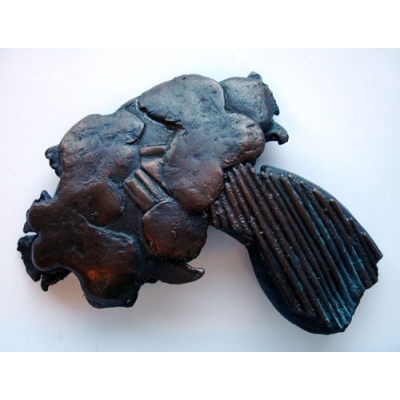
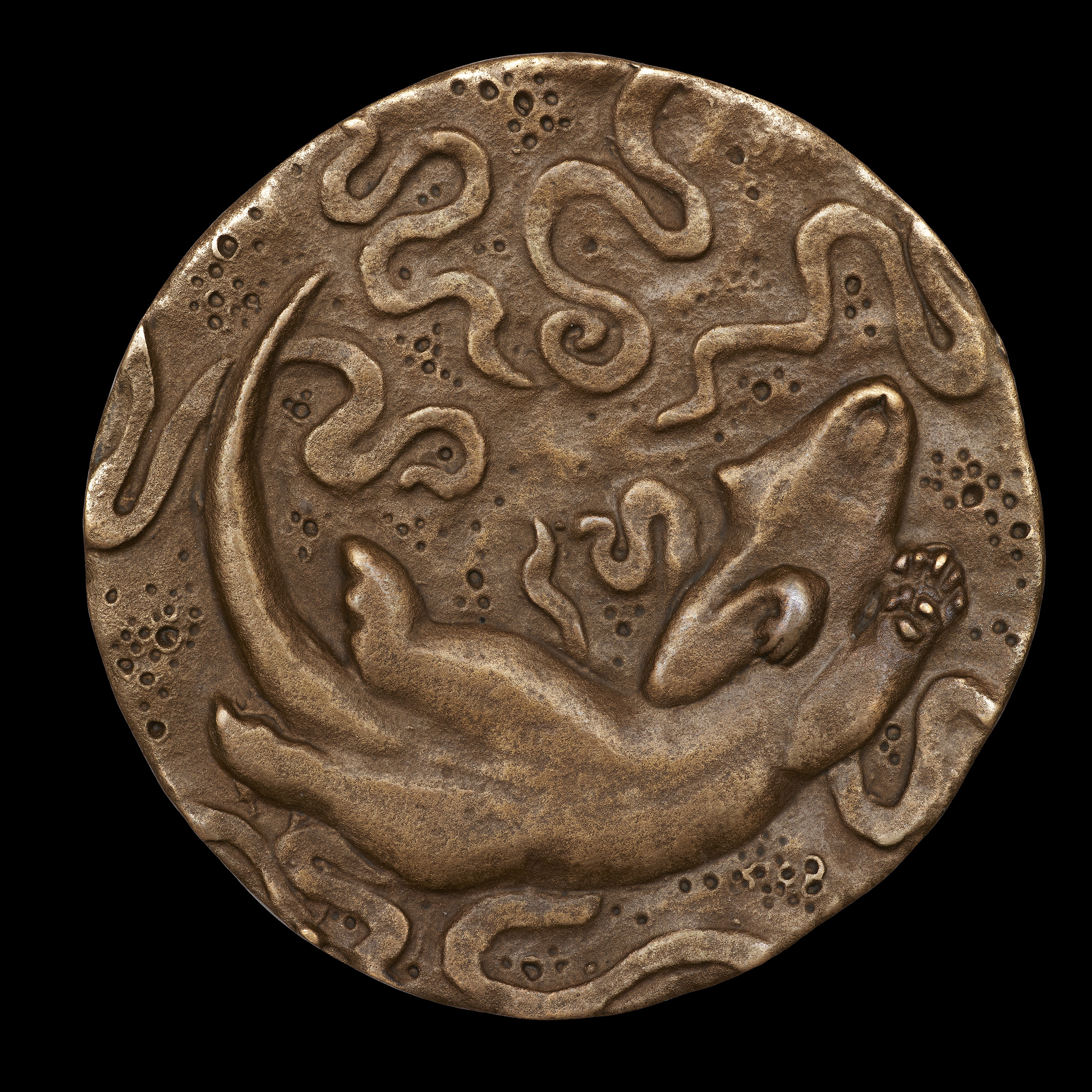
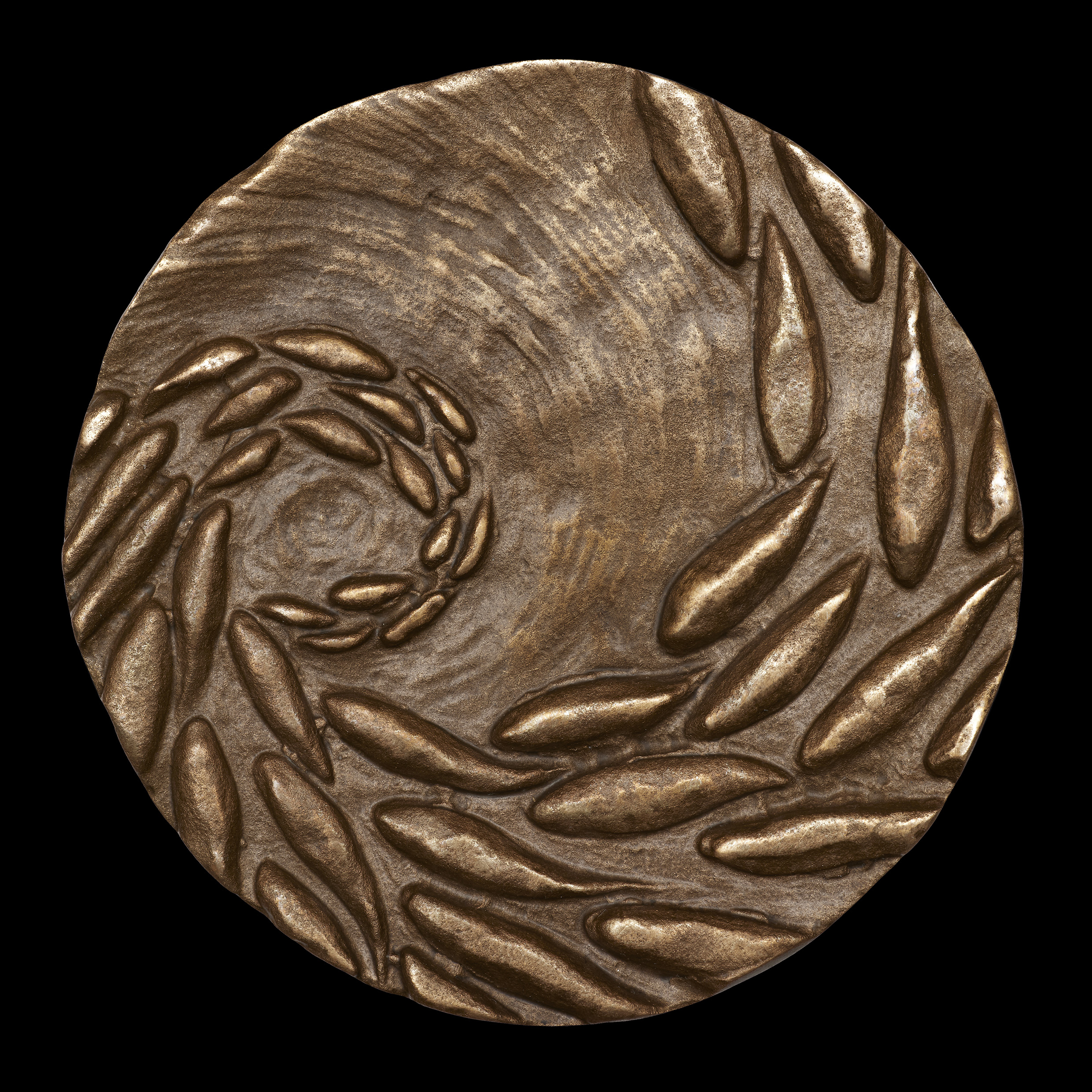
About her medal An Dobharchú, she writes: ‘I chose to focus my design on the otter, having been lucky enough to see one two years earlier during a survey period for the species in Ireland. The medal brings together different ideas around ecosystem functioning and keystone species, citizen science and conservation efforts, and mythology and oral storytelling, all within an Irish context. The title of the medal references the cultural history of the creature in Ireland, while the medal itself depicts the otter within its ecosystem. I hand-carved the piece in wax before casting it in metal using traditional lost-wax casting processes.
There are two terms for otter as Gaeilge (in the Irish language) – ‘madra uisce’ or ‘dobharchú’, which translate literally as ‘water-dog’ or ‘water-hound’. Irish folklore and oral tradition contain numerous references to an dobharchú, though characterisations range from a friendly, benevolent creature to a vicious and murderous beast.
While otter populations declined rapidly across Europe in the late 1900s, the population in Ireland remained relatively strong and stable, and is now one of the densest populations of Eurasian otters globally. As apex predators in many freshwater ecosystems, otters are vital for ecosystem functioning, yet they are threatened by habitat destruction and degradation, pollution, and both accidental and intentional deaths. To monitor their conservation status and to learn more about the species, indicators such as tracks and spraints are recorded.
The medal depicts the otters’ main choice of prey – fish – swimming in synchrony as a school. Hidden below, the elusive dobharchú hunts for his dinner, his eyes looking up to the swirl of food directly above him. As he swims, he extends his forepaw forward, displaying the distinctive webbed, five-toed paw.’